
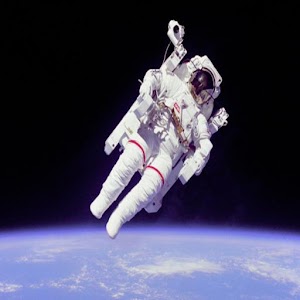
| "Super-Earth" planets are giant-size versions of Earth, and some research has suggested that they're more likely to be habitable than Earth-size worlds. But a new study reveals how difficult it would be for any aliens on these exoplanets to explore space. |
| I have recently released an app for both Android and Chrome that showcases NASA's daily astronomy image. |
Click for Android App

|
Click for Chrome App

|
Showing posts with label gravity. Show all posts
Showing posts with label gravity. Show all posts
Monday, April 23, 2018
No Way Out? Aliens on 'Super-Earth' Planets May Be Trapped by Gravity

Tuesday, November 15, 2016
No need for dark matter?
Theoretical physicist Erik Verlinde has a new theory of gravity, which describes gravity not a force but as an illusion. The theory says gravity is an emergent phenomenon, possible to be derived from the microscopic building blocks that make up our universe’s entire existence. This week, he published the latest installment of his theory showing that – if he’s correct – there’s no need for dark matter to describe the motions of stars in galaxies.
Verlinde, who is at the University of Amsterdam, first released his new theory in 2010. According to a statement released this week (November 8, 2016):
… gravity is not a fundamental force of nature, but an emergent phenomenon. In the same way that temperature arises from the movement of microscopic particles, gravity emerges from the changes of fundamental bits of information, stored in the very structure of spacetime.
Verlinde, who is at the University of Amsterdam, first released his new theory in 2010. According to a statement released this week (November 8, 2016):
… gravity is not a fundamental force of nature, but an emergent phenomenon. In the same way that temperature arises from the movement of microscopic particles, gravity emerges from the changes of fundamental bits of information, stored in the very structure of spacetime.
Wednesday, January 8, 2014
One-of-a-kind triple star system may offer clue to true nature of gravity
The system offers the scientists the best-yet opportunity to discover a violation of a concept called the Equivalence Principle.
Neutron star, 2 white dwarfs give best opportunity yet to study complex gravitational interactions and may give clue to true nature of gravity
Astronomers using the National Science Foundation's Green Bank Telescope (GBT) have discovered a unique stellar system of two white dwarf stars and a superdense neutron star, all packed within a space smaller than Earth's orbit around the Sun. The closeness of the stars, combined with their nature, has allowed the scientists to make the best measurements yet of the complex gravitational interactions in such a system.
In addition, detailed studies of this system may provide a key clue for resolving one of the principal outstanding problems of fundamental physics -- the true nature of gravity.
"This triple system gives us a natural cosmic laboratory far better than anything found before for learning exactly how such three-body systems work and potentially for detecting problems with General Relativity that physicists expect to see under extreme conditions," said Scott Ransom of the National Radio Astronomy Observatory (NRAO).
Neutron star, 2 white dwarfs give best opportunity yet to study complex gravitational interactions and may give clue to true nature of gravity
Astronomers using the National Science Foundation's Green Bank Telescope (GBT) have discovered a unique stellar system of two white dwarf stars and a superdense neutron star, all packed within a space smaller than Earth's orbit around the Sun. The closeness of the stars, combined with their nature, has allowed the scientists to make the best measurements yet of the complex gravitational interactions in such a system.
In addition, detailed studies of this system may provide a key clue for resolving one of the principal outstanding problems of fundamental physics -- the true nature of gravity.
"This triple system gives us a natural cosmic laboratory far better than anything found before for learning exactly how such three-body systems work and potentially for detecting problems with General Relativity that physicists expect to see under extreme conditions," said Scott Ransom of the National Radio Astronomy Observatory (NRAO).
Subscribe to:
Posts (Atom)